
Plain English is the new interface for running a business
For decades, using business software meant learning its menus, but now you can say what you want in a sentence, and the skill that matters most is shifting from knowing your tools to knowing your customers.
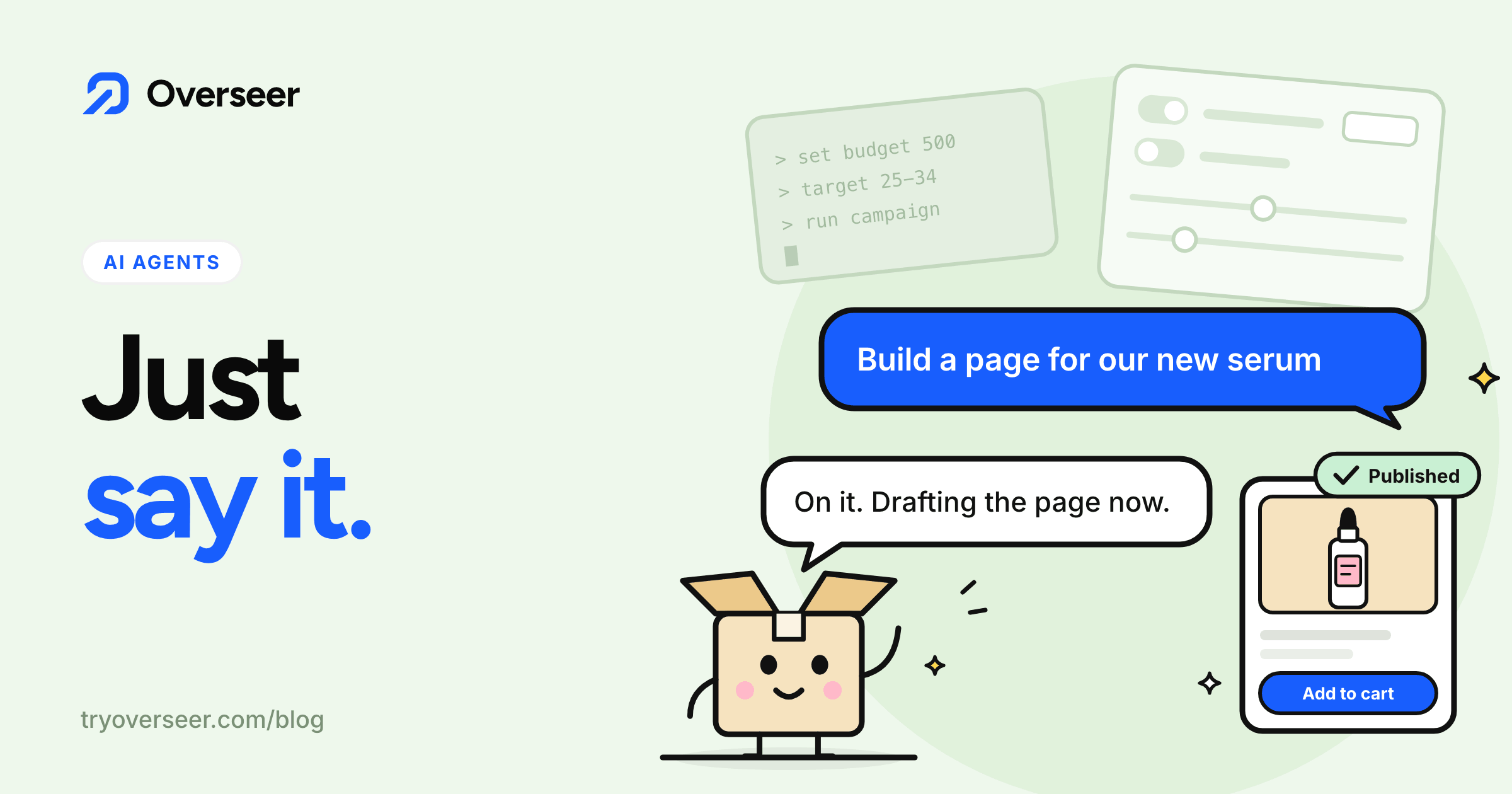
“Build a page for our new serum.”
Seven words. Not long ago, that sentence was the first line of a project. It became a brief, then a call, then a mood board, a set of mockups, two rounds of feedback, a developer’s afternoon and a launch that slipped a week. The sentence was where the work began.
Now it can be most of the work. You say what you want, and the software works out the rest.
That sounds like a convenience. It’s a bigger change than it looks: it changes who gets to run a business well, and what they need to know to do it.
Every interface was a translation layer
Each generation of software has asked people to translate what they want into terms the machine understands. Only the language of the translation has changed.
Commands. Early business software spoke in commands. You learned the exact syntax, typed it perfectly, and the machine did precisely what you said, which was not always what you meant.
Menus. The graphical interface was a huge leap. You no longer had to memorise anything. Instead you had to know where things were: which menu, which tab, which settings page three clicks deep.
Dashboards. Then came software as a service, and a dashboard for every job. Each tool has its own map. To run a modern ad campaign, you need to understand campaigns, ad sets and ads, bidding strategies, attribution windows and audience overlap. Not because your business cares about any of those things, but because the software is organised around them.
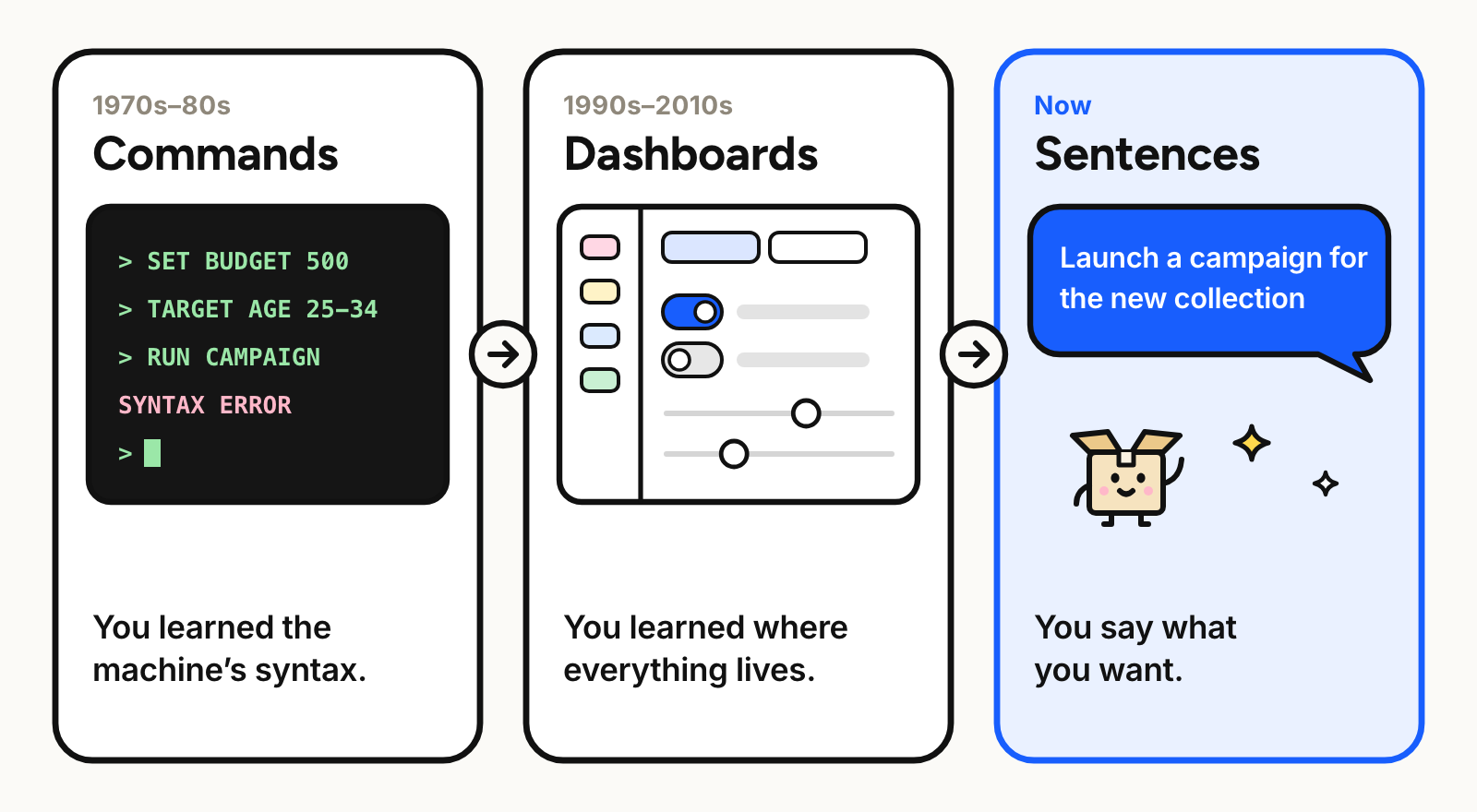
At every stage, software became more powerful, and in a sense more demanding. Much of what we call expertise in ecommerce is really fluency in translation: knowing how to turn “sell more of the new collection to people like our best customers” into the forty settings that make it happen. Entire agencies exist to do that translation for you.
Intent is the interface
Language models reverse the direction of translation. Instead of you learning the software’s language, the software learns yours.
That changes what an instruction looks like. These are all things a brand can say to an AI agent today:
- “Follow up with shoppers who abandoned checkout.”
- “Import this product from an Amazon link and make it store-ready.”
- “Email me when cost per purchase goes above $25.”
- “Tell me which ad sets are ready to scale.”
- “Why isn’t our serum page converting?”
Each one used to be a small project spread across several tools. An abandoned-checkout follow-up meant choosing an app, connecting it to the store, writing the messages, setting the timing and testing it all. Now the sentence carries the intent, and the agent works out the steps.
The settings pages still exist. You’re just not the one who has to visit them.
Plain doesn’t mean vague
There’s a misconception worth clearing up. Talking to software in plain English doesn’t mean you can be vague and still get good results. The skill that matters moves from operating tools to giving good direction.
Compare two instructions:
Make some ads for the new collection.
Launch a campaign for the new collection aimed at people who haven’t bought from us before. Keep it playful, lead with the linen shirts, and don’t discount.
The second one isn’t more technical. There’s no jargon in it. It’s simply a better brief: it says who it’s for, what matters and what to avoid. That’s what makes a good brief for a human team, and it’s what has always separated good marketers from busy ones.
A good agent meets you halfway. It asks when an instruction is genuinely ambiguous instead of guessing. It shows you the result before anything risky goes live. It remembers what you told it last time, so you don’t have to say it twice.
And chat isn’t the whole interface. Words are the best way to say what you want; they’re not always the best way to check that you got it. You still want to see the page, compare the ads and approve the spend. Language for intent, visuals for review: that’s the shape of the interface that’s emerging.
The skill that matters is moving
When software speaks your language, knowing the software stops being an advantage.
For years, the founder who knew Ads Manager inside out had a real edge over the founder who didn’t. That edge is shrinking fast. What remains, and becomes far more valuable, is everything the software can’t translate for you: knowing your customer, knowing what your brand stands for, knowing what good looks like, and having the taste to tell the difference.
That’s good news for a lot of people who have been quietly locked out. The founder who makes brilliant products but finds ad platforms baffling. The maker with a loyal local following who never had the budget for an agency. The experienced operator who knows exactly what they want and is tired of waiting two weeks to get it. For all of them, the hardest part of growing online used to be the interface. It’s about to become the easiest.
A business run in sentences
Here’s what a week can look like when the interface is a sentence.
On Monday: “Plan a Meta campaign for our new arrivals.” On Wednesday: “Our ads stopped performing.” On Friday: “Rebuild our home page around our bestsellers.” Each is a single line. Behind each one is real work across the store, the ads and the listings, done by an agent that tells you what it did and why.
The founder’s week stops being a list of tasks and becomes a series of decisions, which is what it was supposed to be all along. It’s also how you finally close most of the forty tabs.
This is the idea at the heart of Overseer. You install it on your Shopify store, tell it what you need in plain English, and it does the work across your store, your Amazon listings and your Meta ads.
A generation of programmers grew up without ever needing to learn the machine code beneath their programming languages, and nobody thinks of that as a loss. The next generation of founders may never need to learn Ads Manager. They’ll spend that time on something far more valuable: their customers.